.webp) kodah5.com
kodah5.comPhasmophobia: 10 Pro Tips to Survive Ghost Hunts and Identify Ghosts
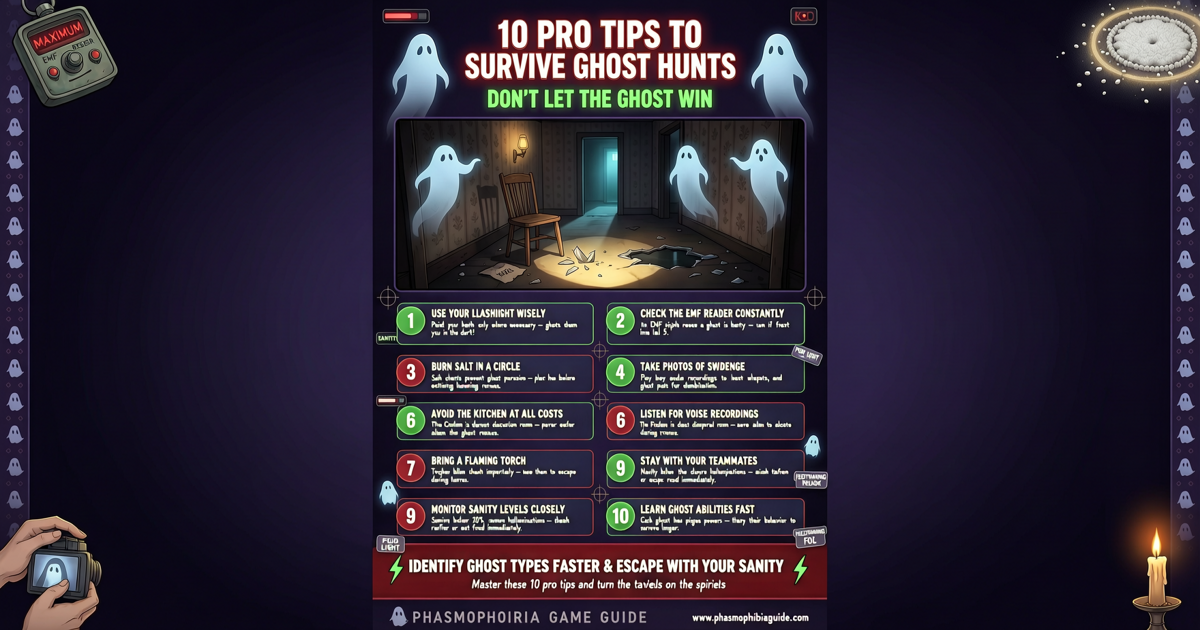
Phasmophobia: 10 Pro Tips to Survive Ghost Hunts and Identify Ghosts
Phasmophobia is a chilling co-op horror game that tasks you and your team with identifying paranormal entities. But with ghosts that hunt, hide, and deceive, survival is just as important as gathering evidence. Whether you're a rookie ghost hunter or a seasoned veteran, these 10 pro tips will sharpen your skills and keep you alive.
1. Always Bring a Thermometer
Freezing temperatures are one of the three pieces of evidence needed to identify most ghosts. A tier 2 or tier 3 thermometer shows exact room temp. If you see breath in a room but the thermometer reads above 0°C, it might be a ghost event—so double-check with the thermometer.
2. Use the Spirit Box Correctly
The Spirit Box is finicky. You need to be in the ghost room with the lights off and ask questions (e.g., "Where are you?"). If the ghost responds, you'll hear a word or phrase. Make sure your teammates aren't talking over you. A global Spirit Box (walkie-talkie style) is only available on certain difficulties, so learn the local one first.
3. D.O.T.S. Projector: Place It Smartly
D.O.T.S. projectors should be placed at floor level, pointing toward open areas. The ghost must physically pass through the green lasers to trigger the silhouette. If you place it in a corner, the ghost might not walk through it. Check all rooms quickly before settling.
4. Know How to Survive a Hunt
When a hunt starts, you hear a heartbeat
- Hide, don't run — Most ghosts can catch you. Find a closet, locker, or behind furniture.
- Shut doors behind you — Ghosts are less likely to open doors if they think the room is empty.
- Turn off your electronics — Head-mounted cameras and flashlights attract ghosts. Switch them off.
- Don't talk — The ghost can hear your voice via local chat.
5. Use Smudge Sticks Proactively
Smudge sticks (incense) can stop a hunt for a few seconds. Light one with a lighter and carry it. If the ghost finds you, light it immediately to break line of sight. Also, smudging near the ghost room before a hunt can prevent one (if used during a ghost event).
6. Identify the Ghost Type Early
Some ghosts have unique behaviors. For example, a Banshee only targets one player; a Revenant is very fast during a hunt. Observing speed, interaction frequency, and special abilities can help narrow down the type. Use the Journal to cross-check evidence.
7. Use Sound Sensors to Find the Ghost Room
On larger maps, sound sensors placed in different rooms can detect ghost sounds (footsteps, whispers). Combine with motion sensors to pinpoint where the ghost is active. This saves time and sanity.
8. Manage Your Sanity
Low sanity increases hunt frequency. Eat sanity pills (found in the van) to restore 40% each. But use them wisely—overuse can leave you without pills when you really need them. Also, staying in the dark drains sanity faster; flicker your flashlight only when necessary.
9. Teamwork Makes the Dream Work
Assign roles: one person handles cameras and monitors the van, two gather evidence, one stays as backup. Use walkie-talkies to coordinate. If someone is being hunted, others can stay silent and let the ghost focus on one target.
10. Learn the Ghost's Favorite Room
Each contract has one "ghost room." Look for interactions like thrown objects, light flickers, or cold breath. Once found, place all evidence tools there. The ghost will rarely leave its room except to roam or hunt. Camping outside the room with a thermometer can confirm.
Master these tips, and you'll go from terrified newbie to ghost-hunting pro. Remember, the ghost is always watching—and hunting. Good luck, and stay safe out there!